Welcome to the RS Freight
Blog

Specializing in All Things Freight

Julia Walker

Latest Blog Posts

Building microservices with Dropwizard, MongoDB & Docker

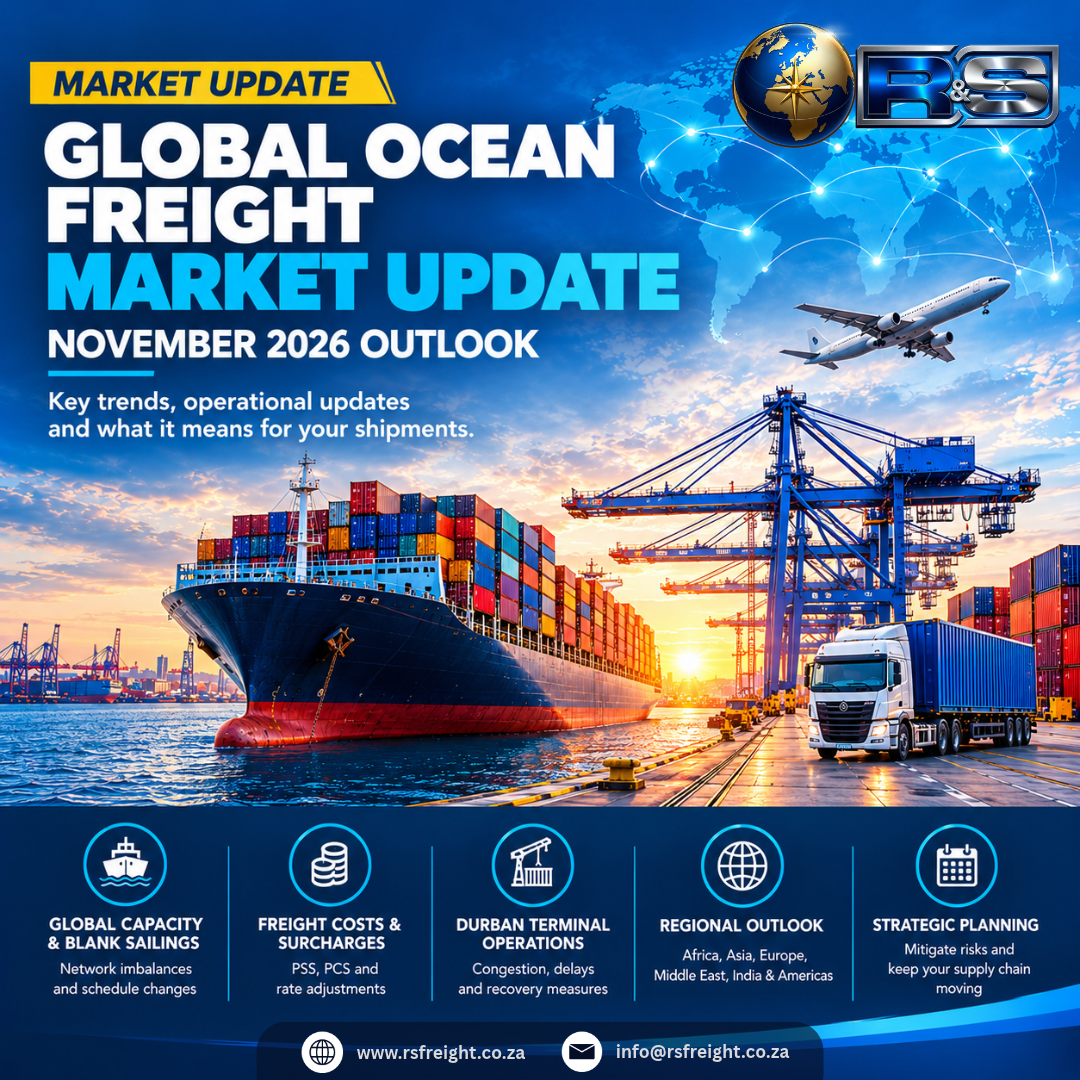
Global Ocean Freight Market Update: November 2026 Outlook & Operational Brief

As we transition into November 2026, global maritime logistics networks are showing gradual signs of operational improvement. However, persistent congestion across key African gateways, vessel schedule disruptions and landside bottlenecks continue to challenge international supply chains.

Julia Walker
RS Freight

Building microservices with Dropwizard, MongoDB & Docker

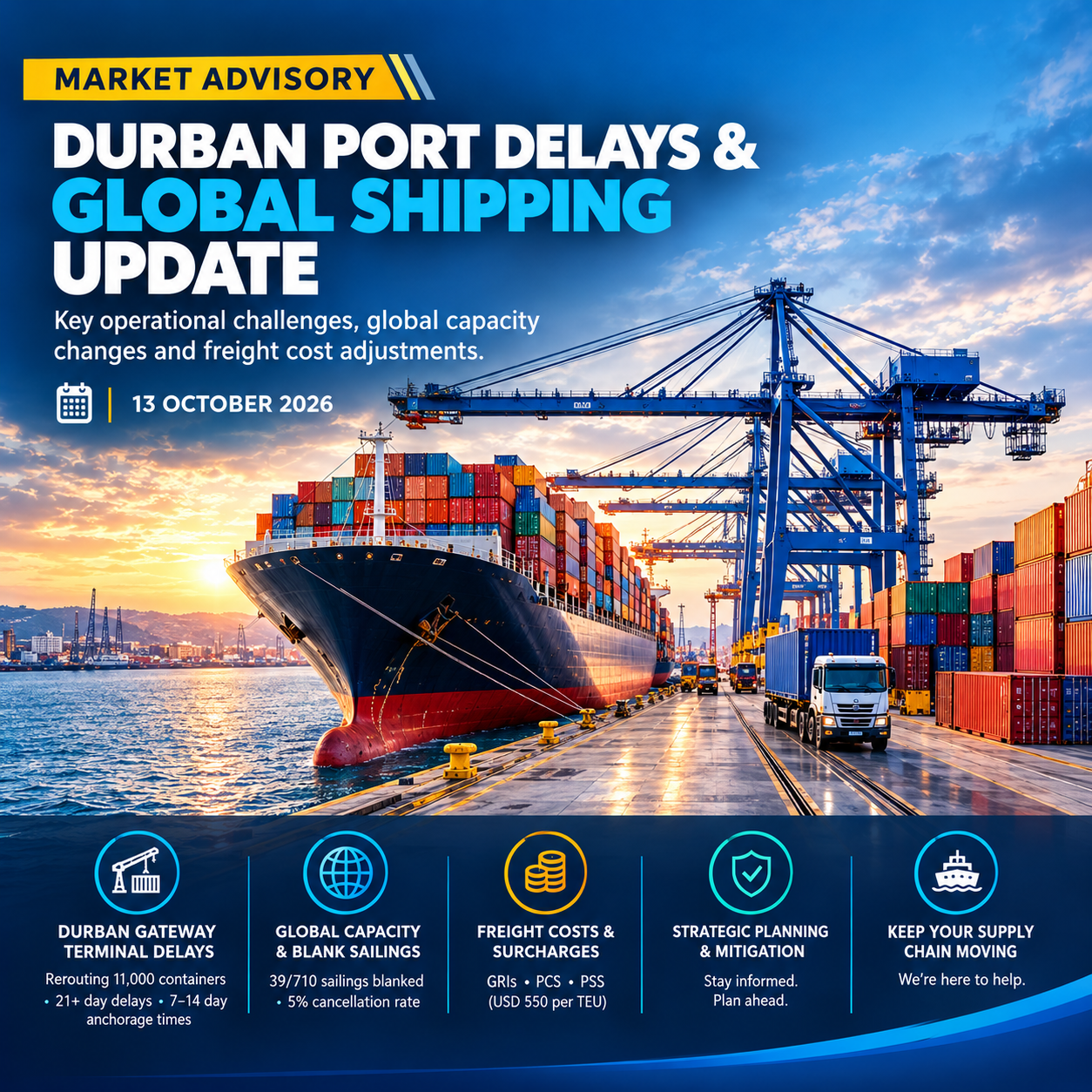
Durban Gateway Terminal Delays & Global Shipping Update

South Africa's shipping and logistics sector continues to face operational challenges, with ongoing disruptions at Durban Gateway Terminal (DGT), post-Golden Week capacity adjustments and rising freight costs placing additional pressure on international supply chains.

Julia Walker
RS Freight

Building microservices with Dropwizard, MongoDB & Docker

Global Shipping Market Update: What Importers and Exporters Should Expect This October

Global shipping conditions remain challenging as we move into October, with congestion, strong demand, inland transport bottlenecks and limited shipping capacity continuing to affect international supply chains.

Julia Walker
RS Freight

Building microservices with Dropwizard, MongoDB & Docker

Warehousing: The Backbone of Efficient Freight Management in 2024

In the dynamic world of logistics, warehousing remains a critical component for ensuring smooth operations and timely deliveries. In 2023, warehousing solutions have evolved to meet the growing demands of both national and cross-border transportation, driven by trends in e-commerce and globalization.

Julia Walker
RS Freight

Fast web page loading on a $20 feature phone

Project Cargo: Navigating Complex Logistics with Expertise

Transporting oversized and heavy cargo presents unique challenges, but expertise in project cargo ensures that even the most complex shipments are handled with precision and care. In 2024, the logistics industry has strengthened its capabilities in this specialized area, offering tailored solutions for industries ranging from construction to energy.

Julia walker
RS Freight

Accessibility Tips for Web Developers

Road Freight: Driving Efficiency Across South Africa

Road freight remains a cornerstone of logistics operations, providing reliable and efficient transportation solutions across South Africa and beyond. In 2023, the sector has enhanced its road freight services to meet the evolving needs of businesses and consumers in a rapidly changing logistics landscape.

Julia walker
RS Freight

Dynamically Securing Databases using Hashicorp Vault

Sea Freight: Navigating Global Trade with Expertise

In the realm of global trade, sea freight is a vital component of comprehensive logistics solutions. In 2024, the industry has continued to expand its sea freight services, offering reliable and cost-effective transportation options for businesses engaged in international commerce.

Julia walker
RS Freight

Adaptive Loading - Improving Web Performance on low-end devices

Air Freight: Fast and Reliable Solutions for Time-Sensitive Cargo

In the fast-paced world of logistics, air freight plays a crucial role in ensuring the timely delivery of high-priority and time-sensitive shipments. In 2024, the industry has further enhanced its air freight services, offering reliable and efficient solutions for businesses worldwide.

Julia walker
RS Freight

Don't Develop Just for Yourself - A Developer's Checklist to Accessibility

Customs: Navigating Complex Regulations with Expertise

Navigating the complexities of customs regulations is a critical aspect of international freight logistics. In 2024, the industry has continued to enhance its customs brokerage services, providing clients with expert guidance and efficient solutions for clearing goods across borders.

Julia walker
RS Freight


As we transition into November 2026, global maritime logistics networks are showing gradual signs of operational improvement. However, persistent congestion across key African gateways, vessel schedule disruptions and landside bottlenecks continue to challenge international supply chains.

While terminal conditions across several Asian hubs are gradually stabilising, shipping lines continue to manage network imbalances caused by adverse weather, blank sailings, vessel diversions and ongoing route recovery initiatives.

For South African importers and exporters, proactive planning, early bookings and careful management of freight costs remain essential. Below is our latest global ocean freight market update, including the Durban terminal operational outlook, surcharge adjustments and regional trade lane conditions for November.

Global Ocean Freight Market Overview

Global shipping networks continue to experience schedule instability as carriers work to restore reliability across major international trade lanes. Although some ports are showing improvements in terminal productivity, the wider shipping network remains under pressure.

Several key factors are shaping the November shipping outlook, including:

• Global vessel schedules operating below historical reliability levels.
• Severe congestion and operational backlogs at major African gateways.
• Gradual recovery across Far East Asian export hubs.
• Blank sailings, vessel omissions and localised equipment shortages.
• European inland transport constraints and potential industrial action.
• Maritime security concerns resulting in Middle East rerouting.

Disruptions in one region can affect vessel availability, container equipment positioning, transshipment connections and arrival schedules elsewhere. Consequently, improvements at individual ports do not necessarily translate into immediate improvements across the entire shipping network.

For businesses moving cargo internationally, realistic transit expectations and regular communication with freight partners will be particularly important throughout November.

Freight Costs and Surcharge Adjustments

Ongoing terminal delays, vessel schedule disruptions and global capacity constraints are contributing to adjustments in ocean freight surcharges.

Carriers have introduced or adjusted Peak Season Surcharges (PSS) and Port Congestion Surcharges (PCS) to address additional operational costs associated with delays, congestion and blank sailing interventions.

Far East Asia to South Africa: Surcharge Advisory
The following surcharge adjustments have been indicated for shipments moving from Far East Asia to South Africa, effective 9 November 2026:

20-foot dry container: USD 1,000
40-foot dry container: USD 2,000

These adjustments relate to the Far East Asia to South Africa trade lane. Shippers should confirm the applicable charges, charging basis, currency, contractual terms and quotation validity with their freight representative or carrier before finalising shipment commitments.

These figures should not automatically be interpreted as the complete freight rate or total landed shipping cost. Other applicable charges may depend on the carrier, routing, shipment terms and service requirements.

What These Surcharge Changes Mean for Businesses
Additional freight charges can affect shipment budgets, landed costs and the commercial planning of international cargo.

Businesses importing from Asia should review current quotations and shipping agreements, confirm which charges apply to their bookings and assess whether revised freight costs affect their purchasing or delivery commitments.

Shippers should consider the following:

• Review carrier surcharge notifications and quotation validity periods.
• Confirm whether PSS, PCS or other additional charges apply.
• Check free-time allowances and potential demurrage or detention exposure.
• Allow for schedule changes when planning inventory replenishment.
• Assess alternative routing and multimodal options where feasible.

Confirming costs in advance can help businesses reduce unexpected expenses and make more informed logistics decisions.

Durban Terminal Operational Alert

Ongoing Congestion and Infrastructure Constraints
Durban remains a major operational concern for cargo moving into South Africa and the wider Southern African region.

Severe congestion continues across terminal yards. Infrastructure bottlenecks, recurring heavy equipment mechanical failures, high yard density and vessel bunching are placing considerable pressure on terminal performance.

The operational outlook provided for November indicates the following anticipated delays:

• Pier 1: Delays of approximately 7–10 days.
• Durban Container Terminal (DCT) / Durban Gateway Terminal (DGT): Backlogs of approximately 10–16 days.

These are indicative operational estimates and not guaranteed waiting times for individual vessels or shipments. Actual conditions may vary depending on terminal operations, vessel arrival patterns, cargo volumes, equipment availability and landside access.

Additional Risks to Landside Logistics
High container dwell times and restricted terminal gate access are expected to continue challenging landside logistics through November.

Potential consequences include:

• Delays in container collection and cargo release.
• Disrupted truck scheduling and transport planning.
• Pressure on warehouse receiving and delivery schedules.
• Greater uncertainty around inventory availability.
• Potential additional storage, demurrage and detention costs, depending on the shipment and applicable terms.

Businesses moving cargo through Durban should avoid relying solely on standard transit assumptions and should allow for the possibility of extended delays.

R&S Freight Strategic Action Advisory

Given the combination of terminal backlogs, vessel schedule instability and increasing surcharge pressure, R&S Freight & Logistics recommends a proactive approach to shipment planning.

1. Submit Bookings Earlier
Where possible, submit booking requests at least 4–6 weeks before the target cargo availability date. Early submissions provide more time to coordinate vessel space, equipment, documentation and shipment requirements. However, early booking does not guarantee space or eliminate the risk of delays.

2. Maintain Flexible Routing Options
Where commercially and operationally feasible, consider alternative routing strategies and regional gateway options. Assess each alternative against total cost, transit time, cargo handling requirements, customs procedures and inland transport availability.

3. Build Realistic Transit Buffers
Allow additional time for vessel delays, terminal backlogs, transshipment changes, customs clearance and final delivery. Businesses handling time-sensitive cargo should communicate potential delays to suppliers, customers and receiving facilities as early as possible.

4. Review Freight Costs and Contractual Terms
Confirm applicable PSS, PCS and other carrier charges before finalising shipment budgets. Review free-time provisions, demurrage and detention terms, and the validity of existing freight quotations.

5. Monitor Shipments Proactively
Maintain regular communication with your freight representative and monitor booking confirmations, vessel schedules, transshipment connections and changes to estimated arrival dates.

The key recommendation for November is simple: plan earlier, retain flexibility and budget for a less predictable transit environment.

Regional Trade Lane Breakdown and Outlook

Conditions differ significantly across global shipping corridors. Understanding the regional outlook can help businesses anticipate potential disruptions and make better-informed routing decisions.

Africa: Persistent Gateway Backlogs
Major gateways across Southern and Western Africa continue to experience widespread operational backlogs. Infrastructure limitations, equipment deficits and high terminal yard density are restricting operational performance.

Durban remains a significant risk to transit reliability for cargo moving into the region.

Businesses shipping through South African and neighbouring regional gateways should plan for potential delays, maintain realistic delivery windows and assess alternative routing options where appropriate.

Asia: Gradual Recovery with Continued Schedule Changes
Terminal productivity across key Asian hubs is progressing towards more regular operating conditions following recent extreme weather disruptions.

Major Chinese export ports are gradually easing backlogs. However, carriers continue to implement tactical blank sailings and port rotation modifications. Singapore remains exposed to transshipment backlogs and extended vessel connections.

Although conditions are improving in parts of Asia, exporters and importers should continue monitoring vessel schedules, equipment availability and transshipment arrangements. Improved terminal productivity does not guarantee an uninterrupted shipment.

Europe: Generally Fluid Operations with Localised Risks
Most Northern European hubs are operating relatively fluidly, with Antwerp maintaining strong gateway reliability.

However, labour contract renewals and potential industrial action create disruption risks in parts of Southern Europe. Inland transport networks also face pressure from barge capacity constraints and low river water levels.

Businesses moving cargo through Europe should monitor port-specific labour developments and assess the availability of inland transport connections, particularly for shipments dependent on barge movements.

Middle East: Rerouting and Transit Volatility
Maritime security concerns and regional geopolitical tensions continue to influence shipping line deployment strategies. Rerouting and adjustments to vessel service loops remain part of carrier network planning.

These changes can extend sailing distances, alter vessel schedules and introduce uncertainty into transit times across major Asia–Europe trade lanes.

Shippers should confirm current routing arrangements and allow flexibility for changes to vessel schedules and transshipment connections rather than relying solely on historical transit times.

Indian Sub-Continent: Moderate Congestion
Ports across the Indian sub-continent are experiencing moderate congestion, localised capacity pressure and schedule recovery delays.

Major West Coast Indian port complexes, including Mundra, Nhava Sheva and Hazira, are expected to remain under moderate strain. The outlook provided indicates that severe congestion is considered unlikely, while equipment availability is expected to remain broadly sufficient apart from occasional localised shortages.

Businesses shipping through these gateways should continue monitoring booking space, equipment availability and vessel schedules. Moderate congestion can still affect individual shipments even when widespread disruption is not anticipated.

Americas: Generally Stable Operations
Marine terminals across North and South America are experiencing comparatively stable and fluid operating conditions. Some isolated weather-related issues have occurred, but widespread system-wide congestion has not been identified in this outlook.

The region is expected to remain broadly stable to moderately disrupted, with most ports operating normally outside localised weather events or carrier network imbalances.

Shippers should continue monitoring local port conditions, weather developments and carrier schedule changes throughout the booking and transit process.

Key Considerations for November 2026

The November outlook reinforces the importance of managing international freight as a connected supply chain rather than relying on port conditions or vessel schedules in isolation.

Before confirming upcoming shipments, businesses should consider the following:

• Booking lead times: Aim to submit booking requests 4–6 weeks before target cargo availability where possible.

• Freight budgets: Confirm applicable surcharges and review quotation validity before committing to shipment costs.

• Transit planning: Build realistic buffers for terminal delays, vessel schedule changes and transshipment uncertainty.

• Routing flexibility: Assess alternative routes when appropriate, taking total landed cost and operational feasibility into account.

• Cargo readiness: Coordinate production, packing, documentation and collection dates to reduce avoidable delays.

• Shipment visibility: Maintain communication with your freight representative and respond promptly to changes in schedules or requirements.

These measures cannot eliminate disruption, but they can help businesses make informed decisions and reduce the risk of preventable supply chain complications.

Looking Ahead: Keep Your Supply Chain Moving

The global ocean freight market is showing signs of gradual operational recovery in selected regions, but significant challenges remain. African gateway congestion, particularly in Durban, continues to place pressure on transit reliability, while carrier schedule changes, regional rerouting and surcharge adjustments are affecting international shipping plans.

For South African businesses importing and exporting in November 2026, early bookings, accurate cost planning, flexible routing strategies and realistic delivery expectations are essential.

R&S Freight & Logistics remains focused on helping businesses navigate changing freight conditions with informed planning and logistics support.

If you have upcoming shipments or would like to discuss how current market conditions could affect your cargo, contact your dedicated R&S Freight & Logistics account representative to discuss your requirements.

Stay informed. Plan ahead. Keep your supply chain moving.

For more information, contact us at info@rsfreight.co.za

Published: 13 October 2026

South Africa's shipping and logistics sector continues to face operational challenges, with ongoing disruptions at Durban Gateway Terminal (DGT), post-Golden Week capacity adjustments and rising freight costs placing additional pressure on international supply chains.

As of 13 October 2026, terminal congestion is contributing to extended vessel waiting times and significant end-to-end supply chain delays. At the same time, ocean carriers are adjusting capacity across major global trade lanes, while additional surcharges are affecting the cost of moving cargo to South Africa.

For importers, exporters and businesses managing international freight, understanding these developments is essential for effective shipment planning, cost management and supply chain continuity.

In this latest market advisory, R&S Freight & Logistics outlines the key developments affecting Durban port operations, global shipping capacity and freight costs, along with the mitigation measures being monitored to help clients manage potential disruptions.

1. Durban Gateway Terminal: Ongoing Operational Disruptions

Durban Gateway Terminal continues to experience significant operational disruptions following recent system transitions and the accumulation of operational backlogs.

These challenges are affecting the movement of cargo through the terminal and contributing to delays across the wider supply chain.

The latest operational outlook highlights three key concerns:

• Cargo Rerouting: Approximately 11,000 containers were rerouted during September to help mitigate severe terminal bottlenecks.

• Supply Chain Delays: Overall end-to-end supply chain delays are currently tracking at more than 21 days, creating challenges for businesses that depend on predictable cargo arrivals.

• Vessel Anchorage Times: Ships are experiencing waiting times of approximately 7 to 14 days at outer anchorage before berthing.

These delays can have a knock-on effect on delivery commitments, stock availability, production schedules and the cost of moving goods inland.

For businesses importing through Durban, it is increasingly important to consider the entire logistics journey, from vessel arrival and terminal handling to container release and final delivery.

2. Terminal Recovery Actions: Improving Cargo Flow

Efforts are underway to improve terminal operations, reduce congestion and accelerate container throughput.

The current recovery strategy focuses on increasing operational capacity, improving landside movement and strengthening visibility across the supply chain.

Bayhead Facility Expansion
The use of the additional Bayhead facility is intended to relieve pressure on landside operations and support the movement of cargo through the port environment.

Improved access to supporting facilities can help ease operational bottlenecks as recovery efforts progress.

Increased Rail Movements
An increased emphasis on rail movements aims to improve inland cargo evacuation and reduce pressure on road-based transport and landside infrastructure.

A more effective intermodal approach can help move containers away from the terminal more efficiently, provided that supporting rail and inland operations can accommodate the additional volumes.

Additional Port Equipment
The deployment of additional port equipment is intended to improve cargo-handling capacity and support faster movement through terminal operations.

Equipment availability and operational efficiency will remain important factors in determining how quickly backlogs can be reduced.

Improved Operational Visibility
Enhanced communication and reporting transparency are also part of the recovery strategy.

Better visibility into cargo status, vessel movements and operational developments can help logistics providers and cargo owners make more informed decisions when planning deliveries and responding to disruptions.

While these measures are intended to improve terminal fluidity, businesses should continue allowing for uncertainty until operational conditions and vessel waiting times improve consistently.

3. Post-Golden Week Global Shipping Capacity and Blank Sailings

Global shipping capacity remains another important consideration following the Golden Week period in Asia.

Ocean carriers continue to adjust capacity across major East-West trade lanes, with blank sailings contributing to changes in available vessel space and schedule reliability.

According to the latest market advisory, the current outlook includes:

• Blank Sailings: Ocean carriers have blanked 39 out of 710 planned sailings across major East-West trade lanes for weeks 41 through 45.

• Global Cancellation Rate: The network is experiencing an approximate 5% global cancellation rate.

• Proactive Monitoring: Vessel capacity, schedule integrity, rolled cargo risks and transshipment connections are being continuously monitored to help minimise downstream delays.

A blank sailing occurs when a carrier cancels a scheduled vessel departure or omits a planned port call. These changes can reduce available capacity and affect the movement of cargo booked on the affected services.

For shippers, the impact may include fewer sailing options, changes to estimated arrival dates and the risk of cargo being rolled to a subsequent vessel.

Transshipment shipments may also face additional uncertainty if connecting vessels operate on revised schedules.

Businesses with time-sensitive shipments should therefore maintain regular communication with their freight partners and confirm the status of bookings as departure dates approach.

4. Freight Costs and Surcharges: What Importers Need to Know

Prolonged terminal delays and global capacity constraints are also affecting ocean freight pricing.

Carriers have introduced or widely applied several pricing adjustments, including General Rate Increases (GRIs) and Port Congestion Surcharges (PCS).

General Rate Increases (GRIs)
A General Rate Increase is an adjustment to a carrier's base freight rate.

These increases can affect the overall cost of international shipping and may change the financial assumptions businesses use when preparing import budgets or negotiating freight arrangements.

Importers should confirm the applicable rate, its effective date and the terms of their quotations before finalising bookings.

Port Congestion Surcharges (PCS)
Port Congestion Surcharges are additional charges associated with congestion-related operational pressures.

Where applicable, these charges can increase the total cost of moving cargo through affected ports and should be included when assessing the overall landed cost of imported goods.

Peak Season Surcharge: USD 550 per TEU
A Peak Season Surcharge (PSS) of USD 550 per TEU is currently being levied on cargo moving from the Far East to Durban, according to the latest market advisory.

A TEU, or twenty-foot equivalent unit, is the standard unit used to describe container capacity.

The surcharge can have a material effect on shipping budgets, particularly for businesses moving multiple containers.

For example, where the stated surcharge applies to five TEUs, the PSS component alone would amount to USD 2,750, before any other applicable freight charges or fees.

Shippers should confirm the surcharge's applicability, effective dates and contractual terms with their freight provider, as charges may vary by carrier, service and shipment.

5. Strategic Planning: How Businesses Can Mitigate Shipping Disruptions

With terminal congestion, vessel schedule changes and additional freight charges affecting the market, proactive planning is essential.

R&S Freight & Logistics is actively monitoring several areas to help manage potential supply chain risks.

Secure Vessel Space and Equipment Allocation
Post-Golden Week capacity adjustments can affect the availability of vessel space and shipping equipment.

Businesses should communicate upcoming cargo requirements early and confirm allocations wherever possible. Early planning can provide more flexibility when schedules or capacity change.

Monitor Carrier Surcharges and Contractual Validity
Freight rates and surcharge arrangements may change as carriers respond to market conditions.

Reviewing quotation validity, applicable surcharges and contractual terms can help businesses avoid unexpected costs and make better-informed shipping decisions.

Track Free Time and Potential Demurrage Exposure
Free time refers to the period allowed for a container to remain at a port or terminal, or to be held outside it under the applicable carrier or service terms, before additional charges may apply.

Demurrage and related container charges can increase when congestion, delayed release or collection constraints prevent cargo from moving within the permitted period.

Businesses should monitor free-time deadlines, container availability, release documentation and collection arrangements closely to reduce avoidable costs.

Consider Alternative Routing and Multimodal Solutions
Where operational conditions permit, alternative routing or multimodal transport options may provide greater flexibility.

Depending on the shipment, cargo origin, destination and available services, a combination of sea, rail and road transport may offer an alternative to a disrupted route.

However, alternative arrangements should be assessed carefully, taking into account total cost, transit time, capacity and any additional handling requirements.

Maintain Regular Communication
Frequent communication between importers, exporters, freight forwarders, carriers and transport providers is particularly important during periods of disruption.

Confirming vessel status, booking details, estimated arrival dates and cargo release requirements can help businesses respond to changes before they become more serious supply chain problems.

6. What This Means for South African Importers and Exporters

The current market conditions highlight the importance of building flexibility into international shipping plans.

Businesses moving cargo through Durban should account for the possibility of extended vessel waiting times, terminal backlogs and delays in the movement of containers inland.

Companies importing from the Far East should also consider the effects of post-Golden Week capacity adjustments and the USD 550-per-TEU Peak Season Surcharge currently reported for cargo moving to Durban.

These conditions may affect:

• Inventory planning and stock replenishment.
• Production schedules and raw material availability.
• Delivery commitments to customers.
• Working capital tied up in goods in transit.
• Overall landed costs and freight budgets.
• Container availability and inland transport arrangements.

Although recovery initiatives are underway at Durban Gateway Terminal, and carriers continue to adjust their networks, conditions may vary between services and shipments.

The most effective approach is to review upcoming bookings, confirm current charges and maintain realistic expectations around transit times.

7. Looking Ahead: Stay Prepared for Changing Market Conditions

Durban Gateway Terminal operations and global vessel capacity remain important factors for businesses relying on international trade.

The reported rerouting of approximately 11,000 containers during September, end-to-end delays exceeding 21 days and vessel anchorage waiting times of 7 to 14 days demonstrate the scale of the current operational challenges.

At the same time, blank sailings and carrier pricing adjustments are adding further complexity to shipping decisions.

Recovery initiatives at the terminal may help improve cargo flow, while continued monitoring of vessel schedules, capacity allocation and surcharge changes can help businesses manage uncertainty.

For importers and exporters, preparation remains essential. Reviewing shipment timelines, monitoring free-time deadlines and confirming the full cost of freight arrangements can help reduce avoidable disruption.

Contact R&S Freight & Logistics

At R&S Freight & Logistics, we understand how important reliable cargo movement, clear communication and effective planning are to your business.

Our team continues to monitor terminal operations, vessel capacity, carrier surcharges and potential routing alternatives to help clients navigate changing market conditions.

If you have upcoming bookings, shipments currently in transit or concerns about how these developments may affect your supply chain, contact your dedicated account representative to discuss your requirements.

Stay informed. Plan ahead. Keep your supply chain moving.

R&S Freight & Logistics
Supporting your cargo and your supply chain through changing market conditions.

Market advisory date: 13 October 2026.

Disclaimer: The operational figures, vessel waiting times and surcharge information in this article reflect the market advisory provided by R&S Freight & Logistics as of the publication date. Conditions, rates and carrier charges may change. Please confirm shipment-specific details, applicable surcharges and contractual terms with your freight representative.

For more information, contact us at info@rsfreight.co.za
Global shipping conditions remain challenging as we move into October, with congestion, strong demand, inland transport bottlenecks and limited shipping capacity continuing to affect international supply chains.

For businesses moving cargo internationally, particularly between Asia and South Africa, careful planning will be important this month. Below is our latest market overview, including expected regional conditions, potential delays and the additional charges shippers should be aware of.

Global Shipping Remains Under Pressure

Global shipping continues to experience significant strain, with port congestion affecting nearly 4 million TEU globally.

Several factors are contributing to the current pressure on
international freight networks, including:
•High global demand for shipping capacity
• Congestion at major ports
• European inland transport bottlenecks
• Restrictions affecting the Panama Canal
• Limited vessel space and equipment availability
• Increased demand ahead of seasonal periods in Asia

These conditions are contributing to longer transit times and continued uncertainty around shipping schedules.
For importers and exporters, this means that building additional time into shipping plans is becoming increasingly important.

US & European Freight Markets

Freight rates in the United States and Europe are expected to remain firm during the early part of October.
In the US, rates are expected to remain elevated before potentially easing later in the month.

Europe is also experiencing pressure from busy terminals and inland transportation delays, which can have an impact beyond the ocean leg of a shipment. Even when vessels arrive on schedule, congestion at terminals and delays in onward transportation can affect the final delivery timeline.

Businesses with time-sensitive cargo should therefore consider the entire logistics chain when planning their shipments, rather than focusing only on the estimated ocean transit time.

Asia: High Demand Ahead of Golden Week
Asia remains a key area to watch during October.

High demand ahead of Golden Week is expected to keep shipping lines busy into early October. Increased demand for available vessel space can place further pressure on freight capacity and schedules.
Port delays in China, particularly around Shanghai and Ningbo, are expected to ease later in the month, although schedule disruptions may continue.

For companies importing from China, early planning and realistic delivery expectations will be particularly important.

Africa: Continued Congestion at Durban Port
South African importers and exporters should also take note of continued congestion at Durban Port.
Port congestion can affect the movement of containers after arrival, potentially resulting in additional waiting time before cargo can proceed to its final destination.
For businesses relying on regular stock replenishment, these delays can have a knock-on effect on inventory planning, production schedules and customer deliveries.

Asia–Africa Routes Face Space and Equipment Constraints
One of the key risks identified for October is the continued shortage of space and equipment on Asia–Africa routes.
Limited availability can make it more difficult for shippers to secure the sailing schedules they require, particularly during periods of strong demand.

Businesses shipping cargo between Asia and South Africa should therefore avoid relying on overly tight timelines and should discuss upcoming shipments with their freight partners as early as possible.

China to South Africa: Allow 7–14 Additional Days
For businesses moving cargo from China to South Africa, R&S Freight & Logistics recommends allowing an additional 7 to 14 days when planning October transit times.

This additional buffer is intended to account for the current congestion, capacity limitations and potential schedule disruptions affecting the route

While actual transit times will vary depending on the shipment, origin, destination, carrier and sailing schedule, allowing additional time can help businesses prepare for potential delays rather than being caught off guard.

Freight Rates and Potential Surcharges
There is some expectation that freight rates may begin to normalise in November if congestion improves.
However, limited space has resulted in carriers implementing additional charges on routes connecting the Indian Subcontinent, Far East and Middle East with South Africa.

Businesses should be aware of the following potential charges:
General Rate Increases (GRI)
A General Rate Increase (GRI) is an adjustment made by carriers to their base freight rates. These increases can affect the overall cost of moving cargo and should be considered when requesting or comparing freight quotations.

Peak Season Surcharges (PSS)
Peak Season Surcharges (PSS) may be applied during periods of increased demand for shipping capacity.

With demand remaining high in parts of the Asian market, shippers should confirm whether applicable peak-season charges are included in their quotations.

Durban Congestion Fees
Ongoing congestion at Durban Port may also result in congestion-related fees being applied to shipments.

These additional costs can affect the final landed cost of imported goods, making it important for businesses to understand the full cost structure of their shipments before confirming transportation. br
What Should Businesses Do This October?
With the current combination of congestion, limited capacity and additional charges, businesses can take several practical steps to reduce the impact on their supply chains.

1. Plan shipments earlier
Where possible, avoid leaving bookings until the last minute. Earlier planning provides more opportunity to secure suitable vessel space and schedules.

2. Build additional time into delivery schedules
For China-to-South Africa shipments in particular, consider allowing 7–14 additional days when planning October deliveries.

3. Confirm all applicable surcharges
When requesting freight rates, ask your logistics provider about potential GRI, PSS and Durban congestion charges so that your budget reflects the expected total shipping cost.

4. Monitor port and carrier conditions
Shipping schedules can change when congestion or capacity constraints affect a particular route. Keeping in regular contact with your freight partner can help you respond to changes sooner.

5. Review upcoming shipments now
If you have cargo scheduled for October or November, now is a good time to review your upcoming requirements and discuss potential risks with your freight provider.

Looking Ahead to November
There is potential for freight rates to begin normalising in November if congestion levels improve.
However, the shipping environment remains dependent on several moving factors, including available vessel capacity, port congestion, seasonal demand and carrier decisions around rates and surcharges.

For this reason, businesses should continue to monitor conditions rather than assuming that current delays and additional costs will automatically disappear next month.

Stay Ahead of Your Upcoming Shipments
October is shaping up to be another important month for businesses moving cargo internationally.

With global port congestion, high demand in Asia, equipment and space shortages on Asia–Africa routes, and continued congestion at Durban Port, allowing sufficient time and understanding the potential additional costs will be essential for effective logistics planning.

If you have upcoming shipments or would like to discuss how current market conditions could affect your cargo, contact the R&S Freight & Logistics team to discuss your requirements.

Stay informed. Stay prepared. Keep your supply chain moving.

for more info, Contact us at info@rsfreight.co.za

In the dynamic world of logistics, warehousing remains a critical component for ensuring smooth operations and timely deliveries. In 2023, warehousing solutions have evolved to meet the growing demands of both national and cross-border transportation, driven by trends in e-commerce and globalization.

With the rise of e-commerce, the need for efficient warehousing has never been greater. State-of-the-art warehouses are now strategically located near major transportation hubs, enabling seamless integration with road, sea, and air freight services. These facilities are equipped with advanced inventory management systems, ensuring real-time tracking and optimal storage conditions for a wide range of goods.

One significant trend in 2024 is the emphasis on sustainability. Many warehousing facilities have adopted green practices, including energy-efficient lighting, renewable energy sources, and waste reduction programs. These initiatives not only reduce the environmental impact but also enhance the overall efficiency of operations.

Modern warehousing solutions are designed to be flexible and scalable, catering to the diverse needs of various industries. From temperature-controlled storage for perishables to secure facilities for high-value items, warehouses now ensure that every client’s requirements are met with precision and care.

In addition to physical infrastructure, value-added services such as packaging, labeling, and quality inspections are increasingly common. This holistic approach streamlines the supply chain, reducing transit times and minimizing the risk of errors.

As the logistics landscape evolves, warehousing continues to leverage cutting-edge technology and best practices. By prioritizing efficiency, sustainability, and customer satisfaction, modern warehousing solutions set the standard for freight management in 2024.

Transporting oversized and heavy cargo presents unique challenges, but expertise in project cargo ensures that even the most complex shipments are handled with precision and care. In 2024, the logistics industry has strengthened its capabilities in this specialized area, offering tailored solutions for industries ranging from construction to energy.

Project cargo involves the transportation of large, heavy, or complex items that require special handling, equipment, and planning. Experienced teams understand the intricacies of such operations, from route planning and risk assessment to securing necessary permits and coordinating with local authorities.

One of the key developments in 2023 is the increasing demand for renewable energy projects, which often involve transporting massive components like wind turbine blades and solar panels. The logistics sector has been at the forefront of these initiatives, leveraging extensive networks and technical know-how to ensure safe and efficient delivery.

Project cargo services are supported by a fleet of specialized vehicles and equipment, including flatbeds, lowboys, and heavy-duty cranes. This enables logistics companies to handle a wide range of oversized cargo, ensuring that each project is executed seamlessly.

Safety is paramount in project cargo operations. Logistics providers adhere to stringent safety protocols and industry standards, conducting thorough risk assessments and implementing comprehensive safety measures. This commitment to safety not only protects the cargo but also ensures the well-being of the team and the public.

In addition to transportation, end-to-end project management services, including site surveys, logistical planning, and on-site supervision, are increasingly common. This integrated approach ensures that every aspect of the project is meticulously planned and executed, minimizing disruptions and delays.

As the world continues to invest in infrastructure and industrial projects, expertise in project cargo plays a crucial role in driving these developments forward. With a focus on innovation, safety, and customer satisfaction, project cargo logistics remain a trusted partner for complex logistics solutions.

Road freight remains a cornerstone of logistics operations, providing reliable and efficient transportation solutions across South Africa and beyond. In 2023, the sector has enhanced its road freight services to meet the evolving needs of businesses and consumers in a rapidly changing logistics landscape.

One of the key trends in 2024 is the increasing demand for last-mile delivery services, driven by the growth of e-commerce. Logistics companies have expanded their fleets and optimized delivery routes to ensure timely and cost-effective last-mile solutions. Advanced GPS tracking and route optimization technologies enable real-time monitoring and efficient navigation, reducing transit times and improving customer satisfaction.

The commitment to sustainability is also evident in road freight operations. Companies have invested in fuel-efficient vehicles and alternative fuel technologies, reducing their carbon footprints and promoting greener transportation solutions. This not only aligns with global sustainability goals but also helps clients meet their own environmental targets.

Safety and reliability are paramount in road freight. Rigorous maintenance schedules for fleets ensure that all vehicles are in top condition and comply with safety standards. Drivers undergo regular training and adhere to strict safety protocols, minimizing the risk of accidents and ensuring the secure delivery of goods.

Road freight services are designed to be flexible and scalable, accommodating a wide range of cargo types and sizes. From small parcels to large pallets, logistics providers offer customized solutions that cater to the specific needs of each client. Value-added services such as express delivery, freight consolidation, and temperature-controlled transport further enhance the versatility of road freight offerings.

As South Africa’s logistics landscape continues to evolve, the road freight sector remains at the forefront of innovation and efficiency. By leveraging advanced technology, sustainable practices, and a customer-centric approach, road freight is well-positioned to meet the challenges and opportunities of 2024 and beyond.

In the realm of global trade, sea freight is a vital component of comprehensive logistics solutions. In 2024, the industry has continued to expand its sea freight services, offering reliable and cost-effective transportation options for businesses engaged in international commerce.

Sea freight services encompass a wide range of solutions, including container shipping, bulk cargo, and specialized shipments. Strategic partnerships with major shipping lines and extensive networks of agents ensure seamless connectivity to ports worldwide. This global reach enables logistics providers to facilitate shipments to virtually any destination, from major ports in Asia to remote islands in the Pacific.

One of the significant trends in 2024 is the increasing focus on digitalization in sea freight. The industry has embraced cutting-edge technologies such as blockchain and IoT to enhance transparency, traceability, and efficiency in operations. These technologies enable real-time tracking of shipments, streamlined documentation processes, and improved communication with clients and partners.

Sustainability is also a key priority for sea freight operations. Many companies have implemented eco-friendly practices such as optimizing shipping routes, reducing fuel consumption, and promoting the use of greener vessels. These initiatives not only minimize the environmental impact but also contribute to cost savings and operational efficiency.

Sea freight services are characterized by a high level of flexibility and customization. Logistics providers work closely with clients to understand their specific requirements and develop tailored solutions that meet their needs. Whether it’s arranging for special handling, navigating complex customs regulations, or coordinating multimodal transport, logistics companies go above and beyond to ensure customer satisfaction.

In addition to transportation, a range of value-added services such as warehousing, distribution, and freight forwarding are increasingly common. This integrated approach streamlines the supply chain, reducing transit times and enhancing the overall efficiency of operations.

As global trade continues to evolve, the sea freight sector remains committed to providing reliable, efficient, and sustainable solutions. By leveraging expertise, global networks, and innovative technologies, sea freight continues to set the standard for maritime transportation in 2024.

In the fast-paced world of logistics, air freight plays a crucial role in ensuring the timely delivery of high-priority and time-sensitive shipments. In 2024, the industry has further enhanced its air freight services, offering reliable and efficient solutions for businesses worldwide.

One of the key advantages of air freight is its speed. Air freight services are designed to meet the demands of industries that require rapid transportation, such as pharmaceuticals, electronics, and perishable goods. With access to major airports and a network of reliable air carriers, logistics providers ensure that urgent shipments reach their destinations on time.

In 2024, the air freight sector has invested in advanced technology to improve the efficiency and transparency of operations. Real-time tracking systems enable clients to monitor the status of their shipments at every stage of the journey. This level of visibility not only enhances customer satisfaction but also allows for proactive management of potential delays or disruptions.

Air freight services are characterized by a high degree of flexibility and customization. The industry offers a range of options, including express delivery, charter services, and temperature-controlled transport. This ensures that each shipment is handled with the utmost care and precision, regardless of its nature or destination.

Sustainability is a growing concern in the air freight industry, and many companies are committed to reducing their environmental impact. Collaboration with eco-friendly carriers and the adoption of best practices to minimize carbon emissions and promote greener logistics solutions are common.

Safety and compliance are paramount in air freight operations. The industry adheres to stringent safety protocols and international regulations, ensuring the secure and compliant handling of all shipments. Regular training and audits further reinforce the commitment to maintaining the highest standards of safety and quality.

As the demand for fast and reliable transportation continues to grow, the air freight sector remains at the forefront of innovation and excellence. By leveraging advanced technology, sustainable practices, and a customer-centric approach, air freight is well-positioned to meet the challenges and opportunities of 2024 and beyond.

Navigating the complexities of customs regulations is a critical aspect of international freight logistics. In 2024, the industry has continued to enhance its customs brokerage services, providing clients with expert guidance and efficient solutions for clearing goods across borders.

Customs regulations can be intricate and vary significantly between countries. Experienced customs brokers understand the nuances of these regulations and stay up-to-date with the latest changes and requirements. This expertise ensures that clients can navigate the regulatory landscape with confidence, minimizing delays and avoiding costly penalties.

One of the key trends in 2024 is the increasing digitalization of customs processes. Technologies such as electronic data interchange (EDI) and blockchain are being used to streamline documentation, improve transparency, and enhance security. These advancements enable faster processing times and reduce the risk of errors, benefiting both logistics providers and their clients.

Sustainability is also a consideration in customs.

Tags

Let's Talk

Do you want to learn more about how I can help your company overcome? Let us have a conversation.